Sunday, 22 March 2015

How You Feed Your Dog Is As Important As What You Feed

Let’s say you’ve already figured out what type of food you’re going to feed your dog. I hate to break it to you, but your work’s not quite done. There are three more aspects of feeding dogs that require your attention.


How Much to Feed Your Dog


Determining how much food to feed your dog is like trying to hit a moving target. Amounts will vary with growth, reproductive status (e.g., decreasing after spay/neuter), exercise levels, health status, and even with something as basic as ambient temperature. I recommend that you use the pet food label’s directions as a starting point and then make adjustments based on your dog’s body condition.

Your goal should be to feed your dog the amount of food that keeps him or her slightly on the skinny side of normal. Research has shown that thin dogs live longer and experience fewer health problems than do dogs who are overweight or even at a “normal” body condition. It can be difficult for owners to accurately assess their dog’s body condition so there is no shame in asking your veterinarian for help in this regard.


How Often to Feed Your Dog


Most healthy adult dogs do best when they are fed twice a day (roughly twelve hours apart). Puppies need to eat two to five times a day depending on their age and breed. In general, the younger and smaller the puppy is the shorter the time between feedings must be to avoid potentially dangerous low blood sugar levels. As puppies mature, you can gradually decrease the number of feedings aiming for the adult’s schedule of twice daily by 12-18 months of age.


Method of Feeding


Owners can pick from three different feeding methods, or a combination thereof:

  1. Free Choice – an essentially unlimited amount of food is available at all times
  2. Time Limited – the dog has a certain amount of time in which to eat after which the food bowl is picked up
  3. Amount Limited – owners determine the size of each meal

Most dogs do best with amount limited feeding, with a touch of time limited thrown in for good measure. By controlling the amount your dog eats, you have the best chance of meeting the “slightly skinny” benchmark that is associated with optimal health and longevity. By keeping an eye on how long it normally takes your dog to finish his or her meals, you can identify health problems that adversely affect appetite in their earliest stages when treatment is at its most effective and least expensive.

If your dog normally grazes throughout the day, you don’t have to pick up the bowl between meals. Just watch how much is food normally left before the subsequent feeding. If it begins to increase, this is a sign that the dog’s appetite is decreasing.

You’ve spent a lot of time, effort, and money to pick the right food for your dog; don’t mess that all up by feeding the wrong way.

Friday, 13 March 2015

Are 'Natural' and 'Organic' Just Words on a Dog Food Label?


Take a close look at the front of a few dog food labels the next time you are at the pet supply store. Do you know what’s behind the phraseology that you see there? In some cases, what is written is defined by a regulatory body, but other terms are essentially meaningless. Read on to learn which words and phrases you should look for and which are pure marketing hype.

The Association of American Feed Control Officials (AAFCO) has established rules about how the front of a dog food label can reference ingredients. For example:
  • Chicken for Dogs — the product must contain at least 95% chicken, not including water used for processing.
  • Chicken Dinner for Dogs — the term “dinner,” or similar words like “entrĂ©e” or “formula,” can only be applied to products that contain 25% or more of the ingredient in question.
  • Dog Food with Chicken — the word “with” implies that at least 3% of the food is made from that ingredient.
  • Chicken Flavoring — “flavoring” indicates that specific tests were able to pick up the presence of the ingredient, but no particular percentage is mandated.

Other terms that have specific definitions include:

Natural


The Association of American Feed Control Officials (AAFCO) defines “natural” as being derived “solely from plant, animal or mined sources, either in its unprocessed state or having been subjected to physical processing, heat processing, rendering, purification extraction, hydrolysis, enzymolysis or fermentation, but not having been produced by or subject to a chemically synthetic process and not containing any additives or processing aids that are chemically synthetic except in amounts as might occur unavoidably in good manufacturing practices.”

Organic


Agricultural products labeled as organic are produced in accordance with the provisions of the Organic Foods Production Act and the regulations of the National Organic Program as outlined by the USDA. The term indicates that an agricultural product has been produced through approved methods that integrate cultural, biological, and mechanical practices that foster cycling of resources, promote ecological balance, and conserve biodiversity. Synthetic fertilizers, sewage sludge, irradiation, and genetic engineering may not be used.1

Human Grade


Human food safety and sanitation standards are described in regulations adopted by the FDA. Description of a product as human-grade indicates compliance with these standards. For a manufactured pet food, both the ingredients and final product processing must comply with the standards. Thus, unless a pet food manufacturing facility complies with human food safety standards, once ingredients enter the facility they are no longer human-grade and it would not be appropriate to describe the finished pet food or ingredients as human-grade.1

Many of the other terms that you’ll find on dog food labels are really just hype. Simplify your dog food shopping experience and ignore any references to a food being holisticancestralinstinctualpremiumsuper-premium, or containing no fillers.

source : http://www.petmd.com/blogs/nutritionnuggets/dr-coates/2014/december/are-natural-and-organic-just-words-dog-food-label-322-32294

Wednesday, 4 March 2015

Is canned food just a treat?


Many people use canned food as a treat or top dressing in addition to their pets’ dry meals. Whether you have a cat or a dog most can’t resist the appealing smell and soft texture of canned food. 
As a nutritionist I had to ask:  Is there a nutritional benefit to feeding canned?
There absolutely can be!  Let’s look at what canned food has to offer:
  1. Moisture content – canned food generally has a moisture content greater than 70%.
    What is the benefit of this high moisture content for your pet?
    MORE WATER!
    If your pet is predisposed to lower urinary tract issues such as crystals and stones, or if you have concerns that your pet isn’t drinking enough water to maintain healthy hydration, adding canned food to their eating regime increases water intake.  Water is essential to life and maintaining hydration can help ensure proper bodily functions.
  2. Calorie dilution – the higher moisture content means lower calories compared to the dry kibble equivalent.
    When would this benefit a cat or dog?  During weight loss.  You can feed a larger volume of canned compared to dry while actually reducing the calories consumed.  The increased water content will help increase the feeling of fullness during a meal and aid digestion.
  3. Soft Texture – the soft texture of canned food helps during times of oral sensitivity.  Oral sensitivity can occur during teething as a puppy, or in aging pets when teeth, gums, and jaws become more sensitive, or during recovery from facial trauma.
So now that you have read some of the awesome benefits of canned food you might wonder: Does it have to be ALL canned or ALL dry??
Absolutely NOT!
Feeding a combination of dry and canned food can provide the benefits of both.  The best way to achieve an appropriate balance of wet:dry is to start by determining the dry food equivalents of the canned food.  For example, let’s say the calories in one can of wet food equals the calories in one cup of dry food.  If you wanted to feed a diet of 1:1 and have been feeding a cup of dry food per day the equivalent including canned would be ½ a can and ½ a cup of dry. 
Make sure you choose a canned food that compliments the dry food you are feeding.  If the label on the canned food does not contain the dry equivalents check the brand website or call the consumer care line.  This way you can be sure your pet is receiving ALL of the nutrients they need in the right amounts.
Want to learn more about which dogs and cats may benefit from eating a diet containing wet and dry good?  Stay tuned!!

Saturday, 28 February 2015

How to Feed Older Dogs


Nothing beats a good, old dog. The relationship between canine senior citizens and their owners is exceptionally deep and multifaceted. Good nutrition can help keep this relationship going strong for as long as possible.

Definitive guidelines regarding what constitutes the best diet for older dogs do not exist. Owners and veterinarians need to work as a team to assess every dog’s individual nutritional needs and make appropriate dietary choices.

The first step is to screen the dog for disease. Nutritional management plays a role in the treatment of many illnesses that are commonly diagnosed in older dogs (e.g., chronic kidney disease, diabetes mellitus, some types of cancer, and heart disease). If a dog has a nutritionally responsive disease, he or she should eat whatever diet is recommended for dogs with that condition. Considerations based on age take a back seat in these cases.

Owners have a lot more leeway when feeding healthy, older dogs. Senior dog foods occupy a lot of shelf space in stores, but they can be quite different from one another. Picking the right product is very important. For example, most senior dog foods are somewhat lower in fat than are traditional, adult foods. Because most older dogs require fewer calories than they once did, reducing the fat content of their diet can help prevent obesity. A lower fat food is perfectly appropriate if your older dog does, in fact, have a tendency to gain weight. On the other hand, if you have a skinny old dog who struggles to maintain his weight, a low fat dog food will make the problem worse rather than better.

Older dogs can also have trouble maintaining their lean body (muscle) mass, and some senior dog foods contain less protein than those designed for young adults. I assume this choice is based on the misguided assumption that lower protein levels will protect an older dog’s kidneys from damage. In fact, many dogs actually need a little more protein in their diet as they age if they are to maintain a healthy lean body mass. Avoiding excess protein is important if a dog is in kidney failure, but research has shown that feeding reduced protein foods to older dogs “just in case” is a mistake.

Look for the following characteristics in diets designed for older dogs:
  • High quality ingredients to maximize digestibility and nutrient absorption and reduce the formation of potentially damaging metabolic byproducts
  • Antioxidants (e.g. vitamins E and C) to promote immune function
  • Fish oils or other sources of omega-3 and omega-6 essential fatty acids to maintain brain, skin, and joint health

Because of the variability in senior dog foods, there is no guarantee that the first one you try will be the right one for your dog. If after a month or so on one diet you are not pleased with your dog’s response, try another… and another… and another, or ask your veterinarian for help picking out the right food for your dog.

Friday, 20 February 2015

What To Do When a Dog Stops Eating


Most dogs love to eat, which is why a meal that has been left untouched immediately raises concerns. An almost endless list of problems can cause dogs to go off their food — some are trivial but others are potentially life-threatening.

Determining whether immediate action or watchful waiting is the appropriate response can prevent canine suffering and unnecessary veterinary expenses. When your dog stops eating, follow these five steps.

1. Think about the last few days

Hindsight often really is 20:20. Now that you know something is up with your dog, think over the last few days. Did something occur that could be responsible for your dog’s lack of appetite, for example a change in diet or a “mysteriously” overturned trash can? Has your dog’s appetite been somewhat reduced recently? Have you noticed any other symptoms (e.g., lethargy or loose stools) that may be related to what’s going on?

Make note of when your dog’s first symptom developed. When dogs are going to get better on their own, improvement will usually be noted within 24-48 hours, but you need to know when that clock started ticking. If skipping breakfast is honestly the first sign of trouble and your dog seems to feel fine otherwise, waiting a day or two to call the vet is perfectly reasonable. If, however, a loss of appetite is just the latest in a series of symptoms that have developed over the course of a few days (or longer), the “wait and see” train has already left the station.

2. Ask other people in the dog’s life if they’ve noticed anything

Unless you are the only person looking after your dog, ask his or her other caretakers whether they’ve noticed anything unusual over the last few days. Perhaps your spouse pulled the dog out from under a bush with something “icky” in his (the dog’s!) mouth on a recent nightly walk, or your neighbor’s dog who routinely comes over to play is ill.

3. Examine the dog

Perform a “quick and dirty” physical exam on your dog. Gently push on his or her belly. It should be soft and your dog should not react in pain. Look for evidence of diarrhea in the fur around the rectum or vomit around the mouth. A dog’s gums should be pink (unless they are pigmented) and moist. Dry or pale mucous membranes can be a symptom of dehydration and/or other serious conditions. If you find anything worrisome on your physical exam, call your veterinarian immediately.

4. Inspect the food

Whether you feed a commercially prepared or homemade diet, something might be wrong with the food itself. This is especially true if you just fed the first meal out of a new batch of food, or if the bag, can, etc. has been open for quite awhile. Look at and smell the food. If anything appears “off,” try feeding your dog again from a different lot of food. I don’t recommend making a wholesale diet change at this point, since it will be difficult to determine if a dog is not eating because he or she does not like the new food or is continuing not to feel well.

5. When in doubt, talk to your veterinarian

It’s always better to err on the side of caution. Problems caught early are easier (and cheaper!) to resolve.

source : http://www.petmd.com/blogs/nutritionnuggets/dr-coates/2015/january/what-do-when-dog-stops-eating-32401

Thursday, 12 February 2015

Manage Your Dog's Hyperthyroidism at Home With This Simple Change


Hyperthyroidism, a very common condition in cats, is exceedingly rare in dogs. Off the top of my head, I can only remember diagnosing one dog with hyperthyroidism in the course of my career (other than those dogs who were on supplements for hypothyroidism and needed a reduction in dose).

My patient had the classic symptoms of hyperthyroidism: weight loss in the face of an excellent, bordering on ravenous, appetite and increased thirst and urination. Unfortunately, identifying the cause was quite simple. I could easily palpate a large mass on the underside of her neck.

A biopsy confirmed what I suspected; cancer of the thyroid gland.

Until recently, I had thought that cancer of the thyroid gland was essentially the only disease that could cause elevated thyroid hormone levels in dogs, but it turns out that diet can be to blame also. A couple of newly published papers reveal that eating certain types of foods and/or treats puts dogs at risk for dietary hyperthyroidism, which can also be called thyrotoxicosis.

The first study looked at twelve dogs who ate raw meat diets or were fed fresh or dried gullets and had elevated levels of thyroid hormone in their bloodstream.

Half of the dogs had clinical signs such as “weight loss, aggressiveness, tachycardia [an abnormally rapid heartbeat], panting, and restlessness,” while the other half were symptom-free. After changing the diet, the eight dogs that were reevaluated all had normal thyroid hormone levels and any symptoms that were present resolved.

In the next study, researchers identified fourteen dogs who had high thyroid hormone levels while eating commercially available dog foods or treats.

“All 14 dogs were being fed all-meat or meat-based varieties of commercially available dog foods or treats at the time of diagnosis… All samples or descriptions of the suspect foods or treats provided by clients were of a similar” type and included air dried dog foods, jerky treats or strips, and thawed, raw dog food. After four weeks off of these foods or treats, the dogs’ thyroid hormone levels were all back to normal and any symptoms they had were gone.

The suspected cause in all these cases was the inclusion of thyroid tissue in the food or treats being fed to the dogs. A similar problem has been identified in people. Ground beef that inadvertently contained thyroid tissue has led to cases of so-called “hamburger thyrotoxicosis.”

This is a sort of good-news bad-news scenario for owners.

The good news: If your dog develops symptoms and laboratory findings consistent with hyperthyroidism, cancer is no longer the “only” possible diagnosis.

The bad news: We all have to be a little bit more careful about what we choose to feed our dogs.

Wednesday, 4 February 2015

All Fiber is Not the Same


Dietary fiber can be used to treat a variety of health conditions in dogs including obesity, anal gland impactions, diarrhea, and constipation. But all fiber is not the same, and adding the wrong type to the diet can actually make some problems worse rather than better.

Fiber can be divided into two major subcategories:

1. Insoluble Fiber

Cellulose, hemicelluloses, and lignins are examples of insoluble fiber. They are not digested and pass through the gut essentially unchanged. Insoluble fiber can help dogs lose or maintain body weight by increasing the volume of food they can eat without adding much in the way of calories. Insoluble fiber also adds bulk to the feces, which can stimulate movement within the gastrointestinal tract, making it helpful in some cases of canine constipation. Additionally, this increased bulk puts more pressure on the anal glands during defecation, which encourages them to release their contents in a normal manner, reducing the risk of impaction.

2. Soluble Fiber

Chicory, inulin, fructooligosacharides, pectins, psyllium, plant gums, oats, barley, beet pulp, and some types of fruits and legumes all contain soluble dietary fiber. The canine digestive tract doesn’t have much of a direct effect on soluble dietary fiber, but  the bacteria that live in the large intestine break it down into short chain fatty acids that are a very important energy source for the cells that line the large intestine. Some types of soluble fiber are also considered prebiotics — substances that increase the prevalence of “good” bacteria within the digestive tract. These characteristics make the presence of appropriate amounts of soluble dietary fiber in the diet very important to the overall health of the large intestine and to the part of the immune system that resides there.

Therefore, it’s not too surprising that soluble fiber can be used to treat some types of large bowel diarrhea. In addition to promoting the growth of beneficial gut bacteria and healthy colonic cells, soluble fiber also absorbs water, which can help make stools more formed and easier for a dog to control. The symptoms of large bowel diarrhea include:
  • having to “go” frequently but producing only a small amount of stool at any one time
  • straining
  • the presence of mucus or fresh blood in the stool

On the other hand, dogs with small bowel diarrhea tend to produce very large amounts of loose stool but do so only a few times a day. These cases tend to respond best to a low-fiber, highly-digestible diet.

Healthy dogs should eat high quality foods that contain both soluble and insoluble fiber to gain the benefits of both. If you think your dog’s stools and elimination behavior could use some improvement, try a different food that includes at least one soluble and one insoluble fiber source that I mentioned above in its ingredient list. Supplements that contain a combination of insoluble and soluble fiber are also available and can be used to good effect, particularly when making a wholesale dietary change isn’t advisable.

Talk to your veterinarian if you have any questions about the role that fiber should play in your dog’s diet.

Friday, 30 January 2015

Dogs Don’t Want Carbs


What would dogs eat if they could choose for themselves?

That is the question that a recent study tried to answer — at least with regards to the relative concentrations of protein, fat, and carbohydrate in dry, canned, and “home” prepared foods.

Scientists ran three experiments using adultPapillonsMiniature SchnauzersCocker SpanielsLabrador Retrievers, andSaint Bernards (female and male, neutered and intact).

Experiment 1 — the dogs were offered dry foods with variable protein, carbohydrate, and fat levels.

Experiment 2 — the dogs were offered commercially available wet foods with variable protein, carbohydrate, and fat levels.

Experiment 3 — the dogs were offered wet foods with a standard protein level but variable carbohydrate and fat levels. The foods were made from blended, skinless chicken breast, lard, wheat flour, vitamins, and minerals.

In experiment one, the researchers found that the composition of the dry food limited the dogs’ ability to eat what they wanted. To form kibble, dry food requires a relatively high percentage of starch. In essence, the dogs were forced to eat more carbohydrate than they wanted.

When eating wet food, the dogs were better able to select their preferred ratios. To quote:

Dogs in the wet diet treatments composed a diet that had similar protein concentration to those in the dry diet treatment (all dogs fell within the band spanning 25–35% total energy as protein), but was considerably lower in carbohydrate and higher in fat than dogs in the dry diet treatments. This pattern, taken together with the fact that dogs in the dry diet treatment selected intake points that were close to the minimum carbohydrate concentration available to them, suggests that the dry diets are appreciably higher in carbohydrate than the target diet composition. Indeed, even dogs on wet foods appear to have minimized the proportional carbohydrate content of their diet. Overall, these data suggest that the preferred diet composition of the dogs has low carbohydrate:fat balance, with between 25% and 35% of energy contributed by protein.

Experiment three confirmed the nutrient ratios that were revealed in experiment two, while eliminating the chance that the dogs were eating more of one wet food than the other because of differences in palatability.

Taken together, these results suggest that the target diet of dogs in our study consists of approximately 30% of energy from protein, 63% of energy from fat, and 7% of energy from carbohydrate.

Despite this research, I’m not convinced that a diet consisting of 30% energy from protein, 63% energy from fat, and 7% energy from carbohydrate is right for most pet dogs.

These preferences evolved when canine ancestors were extremely active hunters in a feast-or-famine environment. Today’s canine couch potatoes who never miss a meal could get quite fat on this type of diet if their portions aren’t strictly controlled (weight gain was a problem in the study we’ve been talking about). Also, switching to a high fat diet may result in pancreatitis if the transition isn’t done gradually.

That said, I do think it makes sense for owners to look for dog foods that get approximately 30% of their energy from protein and are as high in fat and low in carbohydrates as their dog’s lifestyle can support.

source : http://www.petmd.com/blogs/nutritionnuggets/dr-coates/2015/march/dogs-dont-want-carbs-32542

Wednesday, 21 January 2015

The Special Nutritional Needs of Puppies


Puppies are not simply smaller, younger versions of dogs, in the same way that human babies are not miniature adults. Growth and development is hard work, and special nutrition is required to fuel it.

Also, young animals are especially sensitive to the effects of dietary deficiencies, toxins, and poor quality ingredients, so owners should pay very close attention to what food they feed during a dog’s first year of life.

What are the special nutritional needs of puppies? First, let’s take a look at calories — the gas in the tank, so to speak. Puppies should eat a more calorie-dense food than would be appropriate for a typical adult dog.

A high quality puppy food might have 445 kcal/per cup while an adult food in the same line could have 375 kcal/per cup. That might not seem like such a big disparity, but the extra calories are very important in the long term.

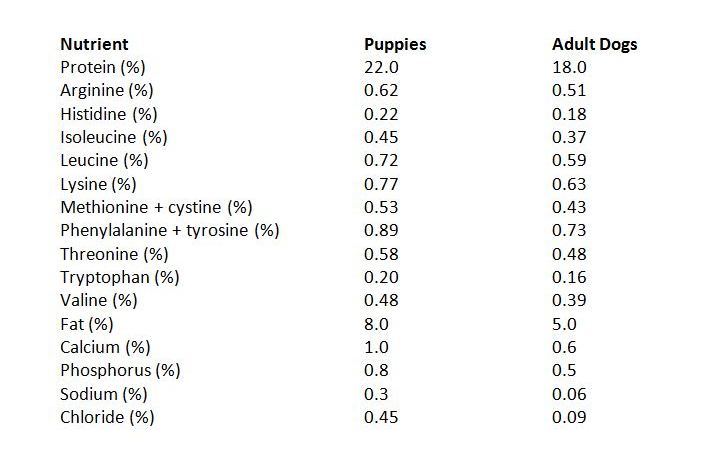
And the differences don’t just stop with calories. Take a look at some of the American Association of Feed Control Officers (AAFCO) minimum nutrient requirement for puppies and adult dogs:

puppy food, breed food, puppy nutrition

You can see that puppies need more of many important amino acids and minerals (and more protein and fat in general) than do adult dogs. Puppies are at risk for nutritional deficiencies if they eat foods designed for adults. Nutrients not regulated by AAFCO are also important.

For example, quality diets contain high levels of certain types of omega 3 fatty acids to promote healthy skin, a glossy coat, and optimize brain and eye development.

Owners of large breed puppies have an additional concern to deal with when picking out a food: developmental orthopedic diseases.

An abnormally rapid growth rate is a major risk factor for hip dysplasia and similar conditions.

Diets designed for large breed puppies should have a lower fat content and therefore a lower caloric density than those meant for small and medium-sized puppies.

Eating a food with too much calcium and phosphorus and a high calcium to phosphorus ratio also increases the odds that a large breed puppy will be afflicted by a developmental orthopedic disease. Therefore, responsible manufacturers carefully balance the amount of calcium and phosphorus in foods designed for these pets.

Whether your puppy is going to grow to be the size of a chihuahua, a mastiff, or somewhere in between, make sure to pick a food that provides perfectly balanced nutrition for this unique time of life, and that it is made from the wholesome, natural ingredients necessary to a lifetime of good health and well-being.

Thursday, 15 January 2015

Feeding Dogs with Intervertebral Disc Disease


Intervertebral disc disease (IVDD) is the scourge  of our “low rider” canine friends, especiallyDachshunds. Those long backs and short legs are caused by chondrodystrophy (atypical cartilage development), a condition that also affects the discs of cartilage that lie between the spine’s vertebrae. Stress causes these abnormal discs to bulge or rupture, which puts pressure on the spinal cord, resulting in pain, weakness, and/or paralysis.

The best way to treat IVDD depends on how severely affected a dog is. Mild to moderate cases (e.g., those with pain and weakness only) will often recover with pain relievers and cage rest followed by a slow return to normal activity.

On the other hand, when a dog’s neurologic function is severely compromised, surgery to relieve pressure on the damaged spinal cord is often necessary. Some dogs fully recover after surgery while others may still have difficulty walking or even remain paralyzed. Unfortunately, chondrodystrophic dogs often have more than one episode of IVDD throughout their lives.

IVDD is a heartbreaking condition. The front end of a severely affected dog is essentially normal, but behind the site of the injury, the dog may not be able to feel, move, or urinate and defecate on its own. While there is nothing an owner can do to treat the underlying chondrodystrophy that leads to IVDD, a couple of recent studies show that paying close attention to what and how much a dog eats goes a long way towards reducing the frequency and severity of these dogs’ back problems.

A paper looking primarily at the effect of body conformation on the likelihood that a dog would develop symptoms associated with IVDD also found a higher risk in overweight dogs, probably because extra body weight increases the stress on intervertebral discs. The authors concluded that dogs at risk for IVDD should be maintained at a “healthy, lean” body condition score of 4-5 out of 9. Take a look at this chart to see what a BCS of 4 or 5 out of 9 looks like.

Another study revealed that a lower body condition score was associated with faster recovery after back surgery (hemilaminectomy). Recovery was defined as the ability to walk without assistance. The dogs included in the project were “7.62 times more likely to have recovered at the initial 3 to 4 week follow-up if they had a BCS of six or less.” The authors concluded that “as weight increased, the time to recovery post hemilaminectomy surgery, also increased.”

I recommend that Dachshunds and other chondrodystrophic dogs (e.g., Beagles, Pekingese, Corgis, and Shih-tsus) eat a diet that is moderate in fat and carbohydrates and relatively high in protein. These characteristics help promote muscle mass while not putting dogs at undue risk for obesity.

Of course, the amount a dog eats also needs to be closely monitored and adjusted to reach or maintain a body condition score of 4-5 out of 9. Nutritional supplements that can help maintain cartilage health (e.g., glucosamine, chondroitin, green-lipped mussels) are also worth considering.

Saturday, 10 January 2015

Does your dog have seasonal environmental allergies?


Like humans, dogs can be allergic to ragweed, grass, pollens, molds and dust mites. Humans’ seasonal environmental allergies are typically identified by sneezing, running nose, and red irritated watery eyes but when a dog is affected by seasonal environmental allergies the typical symptoms are much different. 
What are the signs of seasonal environmental allergies in dogs?
The ESP Test – which stands for Ears, Skin and Paws – is a simple check you can do to determine if your dog is showing symptoms of seasonal environmental allergies.
EarsSee your vet if there’s a strong odour or discharge coming from your dog’s ears, or if it has recurring ear infections. Pawing at its ears or shaking its head may also be signs.
SkinSee your vet if you notice that your dog is itching and scratching, rubbing against furniture to get relief or obsessively grooming. Hair loss, skin lesions and redness are also symptoms.
PawsSee your vet if your dog is excessively chewing at its paws or grooming to the point of removing fur. In fact, itchy paws may be the sign of an allergy – maybe even to the same pollen you are allergic to. Other symptoms include paw discolouration from licking or red/sore paws. 
The good news is you can support healthy skin through proper nutrition.  There are diets available to help support seasonal environmental allergies and other allergies.  The goal of these diets is to increase ceramide production in the skin to create a strong skin barrier.  A stronger, healthier skin barrier can reduce the absorption of allergens. 
source : http://www.petfoodnutrition.com/does-your-dog-have-seasonal-environmental-allergies/